For centuries, the kitchen has been the heart of the home, and within it, ingenious tools have evolved to simplify daily tasks. Long before the advent of electric food processors, the humble vegetable chopper stood as a testament to practical design and enduring craftsmanship. These antique vegetable choppers, far from mere relics, represent a fascinating chapter in culinary history, offering both functional utility and a unique aesthetic appeal to collectors and home cooks alike. They embody a era when kitchen tools were built to last, often passed down through generations.
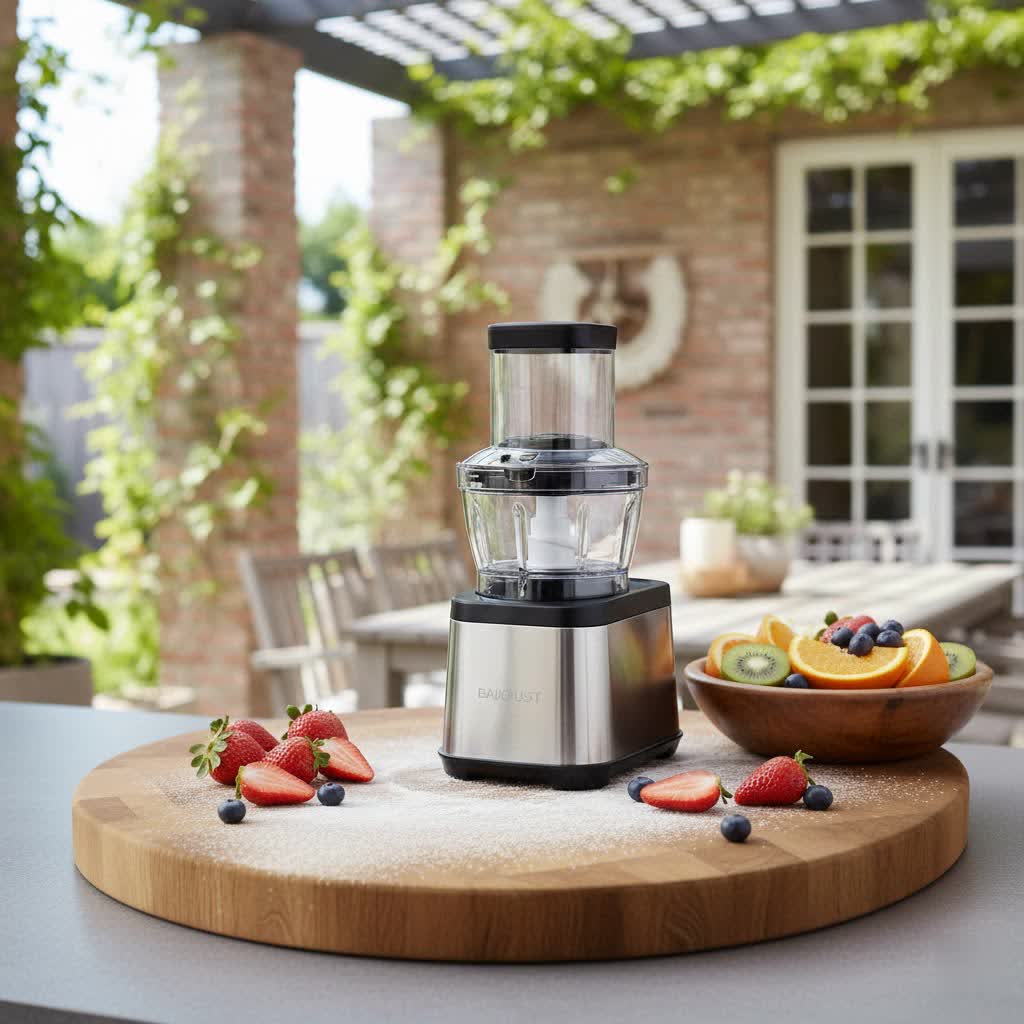
The Enduring Legacy of the Antique Vegetable Chopper in Modern Kitchens
In a world dominated by instant gratification and electric appliances, the antique vegetable chopper offers a refreshing return to simplicity and craftsmanship. These venerable tools remind us of the origins of food preparation, highlighting a period when mechanical ingenuity, rather than electrical power, drove kitchen efficiency. Understanding their legacy provides insight into the evolution of our kitchens and the enduring appeal of durable, well-designed instruments. Their presence today speaks to a desire for connection to the past, offering a tangible link to culinary traditions and the satisfying process of manual food preparation.
Tracing the Roots: A Brief History of Vegetable Choppers
The journey of the vegetable chopper began out of necessity, transforming labor-intensive food preparation into a more manageable task.
Early Manual Designs
|
Our Picks for the Best Vegetable Chopper in 2026
As an Amazon Associate I earn from qualifying purchases.
|
||
| Num | Product | Action |
|---|---|---|
| 1 | Vegetable Chopper,12-in-1 Multifunctional Food Chopper,Professional Onion Chopper with 7 Blades,Vegetable Cutter with Container for Salad,Potato,Carrot,and Garlic; Essential Kitchen Tool(Grey) |

|
| 2 | Mueller The Real Original Pro Chopper since 2013 Vegetable Chopper Mandoline Slicer, 8 Blade Food Veggie Chopper Onion Vegetable Cutter with Container, Kitchen Gadgets & Essentials, (10 in 1) |
|
| 3 | Simple Deluxe Food Processor, 450W Electric Food Chopper with 2 Bowls (8 Cup+8 Cup) & 2 Bi-Level Blades, Small Electric Meat Grinder Processor for Nuts, Fruits, Meat, Vegetable, Baby Food, Silver |
|
| 4 | Fullstar The Original Pro Chopper - Vegetable Chopper and Spiralizer, Food Chopper with Container, Fruit Slicer, Kitchen Gadgets & Gifts, Home Essentials (4 in 1, White) |
|
| 5 | Semi-Automatic 12-Inch Commercial Electric Food Slicer - 370W Motor with Precision-Adjust Blade for Home & Kitchen Use Chromium Steel Construction |
|
| 6 | Mueller Vegetable Chopper Mandoline Slicer, Food Veggie Chopper, Cheese Grater, Onion Vegetable Cutter with Container, Dicer, Kitchen Gadgets & Essentials, White Sand/Grey |
|
| 7 | Mueller Pro-Series All-in-One, 12 Blade Mandoline Slicer for Kitchen, Food Chopper, Vegetable Slicer and Spiralizer, Cutter, Dicer, Grater, Kitchen Gadgets Sets with Container, White Sand/Gray |
|
| 8 | Fullstar Mandoline Slicer for Kitchen - Vegetable Chopper, Onion Potato Food Veggie Fruit Slicer and Cutter with Container, Kitchen Gadgets & Gifts, Home Essentials (6-in-1, White/Black) |
|
| 9 | OXO Good Grips Vegetable Chopper |
|
| 10 | ONCE FOR ALL Safe Mandoline Slicer 5 in 1 Vegetable Chopper Food Potato Cutter, Strips Julienne Dicer Adjustable Thickness 0.1-8 mm Kitchen Chopping Artifact Fast Meal Prep (Gray) |
|
During the Victorian period, food preparation was extremely labor-intensive as most ingredients were unprocessed and required daily preparation. Early choppers were often simple, hand-held implements, typically featuring metal blades attached to wooden handles. Companies like Joseph Tyzack and Sons in Sheffield, for example, manufactured these basic but essential tools, which consisted of a metal blade and shaft with a wooden handle, used for manually chopping vegetables. These designs emphasized durability and a straightforward up-and-down chopping motion.
The Dawn of Mechanical Innovation
The late 19th century ushered in a new era of mechanical ingenuity in the kitchen. In 1877, the Starrett meat and vegetable chopper emerged, touted as one of the most useful and labor-saving inventions of its time. This innovative device featured a metal drum that rotated on a ratchet, while a hand-crank raised and lowered a guillotine-action blade, ensuring food was chopped evenly as the drum turned. Another significant development came from Philadelphia, with the Enterprise Vegetable Slicer, produced between 1876 and 1900. This cast iron and steel machine utilized double rotating slicing blades, demonstrating the growing complexity and specialization of these early choppers. These advancements paved the way for more sophisticated manual food processing.
Evolution Towards Modernity
While antique vegetable choppers primarily refer to manual devices, their evolution naturally led to the development of electric food processors. The first electric food processor, the Starmix, was introduced in 1946 by Electrostar in Germany. Later, the French company Robot-Coupe developed commercial food processors in the 1960s, which were eventually introduced to North America as the Cuisinart brand in 1973. This marked a clear distinction, with antique choppers representing the pre-electric, hand-operated era, celebrated for their mechanical simplicity and robust construction.
Varieties of Antique Vegetable Choppers: A Collector’s Guide
Antique vegetable choppers come in a diverse range of designs, each reflecting the ingenuity of its era and purpose.
Hand-Held Choppers
These are perhaps the most recognizable form of antique choppers, characterized by a blade (single or multiple) and a handle, designed for an up-and-down motion. They often feature stainless steel blades and wooden handles, offering a classic look and comfortable grip. Many examples showcase hand-forged iron blades with simple, ergonomic wooden handles, sometimes with double blades for increased efficiency.
Table-Mounted Choppers
More complex than their hand-held counterparts, table-mounted choppers often resembled early meat grinders. These cast-iron devices would clamp onto a countertop, featuring a hand-crank that operated a series of internal blades or a grinding mechanism. The Universal No. 1 Cast Iron Food Chopper, a prominent example, allowed for more consistent and higher-volume chopping, often used for both vegetables and meat. Their robust construction made them staples in busy kitchens.
Specialized Choppers
Beyond general-purpose choppers, manufacturers also created specialized tools. Some designs focused purely on slicing, like the Enterprise Vegetable Slicer with its rotating blades, while others might have featured multiple blades in a zigzag pattern for more uniform results. These specialized choppers highlight how inventors sought to optimize different aspects of food preparation, demonstrating a thoughtful approach to kitchen utility.
Comparative Overview: Antique vs. Modern Choppers
Understanding the differences between antique and modern vegetable choppers is key for both collectors and practical users.
| Feature | Antique Manual Vegetable Chopper | Modern Manual Vegetable Chopper | Modern Electric Food Processor |
|---|---|---|---|
| Power Source | Human effort (manual) | Human effort (manual) | Electricity |
| Materials | Cast iron, steel, wood, sometimes glass | Plastic, stainless steel, rubber | Plastic, stainless steel, glass |
| Functionality | Chopping, mincing (basic) | Chopping, dicing, some slicing | Chopping, slicing, dicing, shredding, pureeing, mixing |
| Durability | Exceptionally high, built to last | Varies, often good | Varies, generally good |
| Maintenance | Hand washing, occasional oiling for cast iron, avoiding dishwashers for painted handles | Dishwasher safe parts common | Easy cleaning, specific care for electrical components |
| Portability | Generally high (hand-held), some table-mounted are heavier | High | Low (requires power outlet) |
| Cost | Varies greatly (collectible value) | Low to moderate | Moderate to high |
| Aesthetic | Rustic, utilitarian, historical charm | Modern, ergonomic | Sleek, functional |
How to Select and Appreciate an Antique Vegetable Chopper
Whether you’re a seasoned collector or a home chef looking for a unique kitchen tool, choosing an antique vegetable chopper requires careful consideration.
Defining Your Interest
First, consider your primary motivation. Are you a collector seeking rare and historically significant pieces, or are you looking for a functional tool to incorporate into your daily cooking routine? This distinction will guide your search, as collector-grade items often prioritize historical accuracy and mint condition, while user-grade items prioritize functionality and safety.
Key Factors for Value and Authenticity
Several factors determine the value and authenticity of an antique vegetable chopper:
- Material and Craftsmanship: Look for durable materials like cast iron, steel, and well-preserved wooden handles. Bakelite handles, popular in the 1930s, especially in red, butterscotch yellow, or apple green, can also add significant value. The presence of hand-forged elements often indicates an older, more collectible piece.
- Condition: Mint condition, or excellent condition with minimal wear, significantly increases value. Check for rust, cracks in wooden handles, or chipping paint. For functional use, ensure blades are intact and movable parts operate smoothly.
- Unique Features and Design: Unusual shapes, specific blade configurations, or innovative chopping mechanisms can make an item more desirable. For instance, choppers with multiple blades or distinct spring-loaded actions are often prized.
- Manufacturer Marks: Authentic antique choppers often bear manufacturer names (e.g., Starrett, Universal, Enterprise, Disston, Tyzack and Sons), patent dates, or hallmarks, which can greatly enhance their historical value and help in dating the piece.
Reputable Sources
You can discover antique vegetable choppers at various locations. Flea markets and antique shops are excellent places to find unique pieces, allowing you to inspect items firsthand. Online marketplaces like Etsy and eBay also offer a wide selection, though it’s crucial to examine photos closely and ask sellers for detailed descriptions and provenance. Speciality antique kitchenware dealers might offer higher prices but often provide authenticated, well-maintained pieces.
Top 3 Notable Antique Vegetable Choppers for Your Collection
While “top” can be subjective for collectibles, certain types and brands frequently appear in discussions among enthusiasts for their historical significance and design.
1. The Classic Hand-Forged Blade Chopper
These choppers represent the earliest and most fundamental form of the tool. Typically, they feature a simple, often crescent-shaped or rectangular, hand-forged steel blade with a sturdy wooden handle. Their charm lies in their rustic simplicity and the visible marks of individual craftsmanship. These pieces are often highly sought after for their primitive aesthetic and connection to pre-industrial kitchens. They are excellent for those who appreciate the beauty of raw materials and timeless utility.
2. The Starrett Meat and Vegetable Chopper (Circa 1877)
A marvel of late 19th-century mechanical design, the Starrett chopper is a prime example of early innovation aimed at reducing manual labor. With its unique hand-cranked guillotine action and rotating drum, it offered a more efficient and consistent chop than simpler hand-held blades. Finding a Starrett chopper in good working order is a significant find for collectors interested in the mechanical evolution of kitchen gadgets. Its intricate design and historical impact make it a standout piece.
3. The Universal No. 1 Cast Iron Food Chopper
Manufactured by Landers, Frary & Clark, the Universal Food Chopper was a ubiquitous presence in American kitchens for decades, with models like the No. 1 being particularly popular. These cast-iron, table-mounted devices were versatile, capable of chopping both vegetables and meats with interchangeable blades and plates. Their enduring popularity and robust construction mean they are still relatively common to find, making them an excellent entry point for new collectors seeking a functional and historically significant piece. Many models feature wooden handles and retain their original charm, even with signs of age.
Preserving History: Care and Restoration Tips for Your Antique Chopper
Owning an antique vegetable chopper means becoming a custodian of history. Proper care ensures its longevity, whether for display or continued use.
To use an antique chopper safely, ensure there is no rust on the blade or any parts that come into contact with food. If the handle has painted elements, verify that the paint is not flaking, as it could contaminate your ingredients. Always prioritize safety and hygiene.
Cleaning is straightforward. For most metal and wood choppers, hand washing with mild soap and water is best. Avoid harsh abrasives or dishwashers, especially for items with painted wooden handles, as this can strip away the original finish and paint. Dry thoroughly immediately after washing to prevent rust, particularly on cast iron components. For cast iron, a light application of food-grade mineral oil can help maintain its condition and prevent corrosion. When storing, keep choppers in a dry environment to avoid moisture buildup. For display pieces, consider gentle cleaning to remove surface dirt, but embrace the natural patina that tells its age and story. Excessive restoration can sometimes diminish historical value.
“Antique kitchen tools are more than just objects; they are tangible links to our culinary past, offering insights into the ingenuity and daily lives of previous generations.” – Admin, ReviewAmaz.com, Kitchen Appliance Expert
Conclusion
Antique vegetable choppers are truly fascinating pieces, blending historical significance with enduring utility and charm. From the rudimentary hand-forged blades of the Victorian era to the sophisticated mechanical inventions of the late 19th century, these tools played a pivotal role in shaping culinary practices and continue to captivate collectors and home cooks today. Their simple, robust designs stand in stark contrast to modern electric appliances, yet their effectiveness and tactile satisfaction remain undeniable. Whether you’re seeking a functional tool to dice vegetables with a touch of nostalgia or a unique piece to enrich your collection, an antique vegetable chopper offers a glimpse into a bygone era of kitchen craftsmanship.
What story will your antique vegetable chopper tell in your home?
Frequently Asked Questions
What materials are commonly found in antique vegetable choppers?
Antique vegetable choppers are typically crafted from durable materials such as stainless steel or cast iron for the blades and bodies, often complemented by sturdy wooden handles. Glass containers were also used in some manual chopper designs. These materials contribute to their longevity and classic aesthetic.
Can antique vegetable choppers still be used for food preparation today?
Yes, many antique vegetable choppers are perfectly safe and functional for modern food preparation, provided they are in good condition. Ensure there is no significant rust, and any painted handles are not flaking paint into food. Proper cleaning and maintenance are essential for safe use.
How do I identify a valuable antique vegetable chopper?
Valuable antique vegetable choppers often possess unique qualities such as rarity, unusual designs, mint or excellent condition, and distinctive handles made from materials like painted wood or Bakelite. Checking for manufacturer marks and patent dates can also provide clues about its authenticity and historical significance.
What’s the difference between an antique vegetable chopper and a vintage one?
While often used interchangeably, “antique” generally refers to items over 100 years old, placing many early manual choppers in this category. “Vintage” typically describes items that are at least 20 years old but less than 100, encompassing later manual designs and early electric models.
How should I clean and maintain an antique chopper?
To clean an antique vegetable chopper, hand wash it with mild soap and water, then dry it thoroughly to prevent rust. It’s crucial to avoid dishwashers, especially for items with painted wooden handles, as this can damage the finish. For cast iron parts, consider a light application of food-grade mineral oil to maintain their condition.
