In the fast-paced world of restaurant operations, where every second counts and consistency is paramount, the efficiency of your kitchen can make or break your success. Vegetable preparation, traditionally a labor-intensive and time-consuming task, often bottlenecks the entire workflow. Imagine a kitchen where dicing onions, slicing peppers, and chopping carrots are handled in mere moments, freeing up your skilled staff for more complex culinary creations. This is where the commercial vegetable chopper becomes not just a tool, but a crucial investment for any restaurant aiming for peak performance.
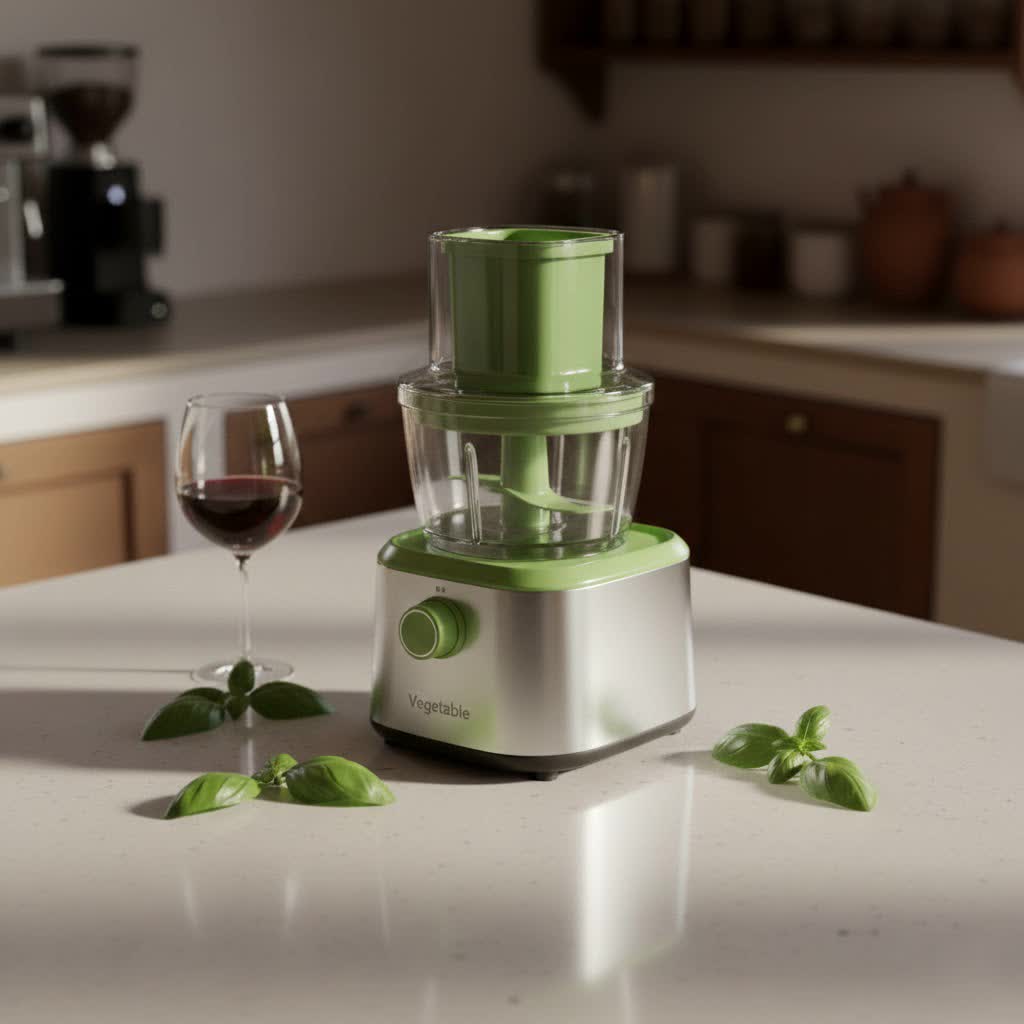
Vegetable Choppers: The Time-Saving Solution for Modern Restaurant Kitchens
Commercial vegetable choppers are specialized kitchen appliances designed to streamline the preparation of large volumes of vegetables in professional environments. Unlike their home-grade counterparts, these units are built for continuous, heavy-duty use, featuring robust motors, industrial-grade materials, and precision blade systems. They are commonly found in restaurants, cafeterias, and catering services where speed, consistency, and hygiene are critical for success.
The benefits of integrating a commercial vegetable chopper into your restaurant kitchen are undeniable. These machines significantly cut down prep time, allowing staff to focus on other vital tasks and improving overall productivity. By ensuring uniform cuts, they also contribute to consistent cooking times, improved food presentation, and an elevated dining experience for your customers. This leads to faster service, increased table turns, and ultimately, a healthier bottom line.
Categorizing Commercial Vegetable Choppers for Restaurants
The commercial market offers various vegetable choppers, each designed to meet specific kitchen demands and operational scales. Understanding these categories is crucial for selecting the right equipment for your restaurant.
Manual Vegetable Choppers
Manual choppers are hand-operated and often the most budget-friendly option. They are excellent for smaller operations, specific tasks, or as a backup.
- Advantages: Cost-effective, simple to use, easy to clean, no electricity required.
- Disadvantages: Requires physical effort, lower output compared to electric models, not ideal for very high-volume needs.
- Best For: Small cafes, specialty stations (e.g., salad bars), or kitchens with moderate vegetable preparation needs. Examples include Nemco’s Easy Chopper series for dicing and wedging specific items.
|
Our Picks for the Best Vegetable Chopper in 2026
As an Amazon Associate I earn from qualifying purchases.
|
||
| Num | Product | Action |
|---|---|---|
| 1 | Mueller Vegetable Chopper Mandoline Slicer, Food Veggie Chopper, Cheese Grater, Onion Vegetable Cutter with Container, Dicer, Kitchen Gadgets & Essentials, White Sand/Grey |

|
| 2 | Mueller Pro-Series All-in-One, 12 Blade Mandoline Slicer for Kitchen, Food Chopper, Vegetable Slicer and Spiralizer, Cutter, Dicer, Grater, Kitchen Gadgets Sets with Container, White Sand/Gray |
|
| 3 | OXO Good Grips Vegetable Chopper |
|
| 4 | Simple Deluxe Food Processor, 450W Electric Food Chopper with 2 Bowls (8 Cup+8 Cup) & 2 Bi-Level Blades, Small Electric Meat Grinder Processor for Nuts, Fruits, Meat, Vegetable, Baby Food, Silver |
|
| 5 | Semi-Automatic 12-Inch Commercial Electric Food Slicer - 370W Motor with Precision-Adjust Blade for Home & Kitchen Use Chromium Steel Construction |
|
| 6 | ONCE FOR ALL Safe Mandoline Slicer 5 in 1 Vegetable Chopper Food Potato Cutter, Strips Julienne Dicer Adjustable Thickness 0.1-8 mm Kitchen Chopping Artifact Fast Meal Prep (Gray) |
|
| 7 | Fullstar The Original Pro Chopper - Vegetable Chopper and Spiralizer, Food Chopper with Container, Fruit Slicer, Kitchen Gadgets & Gifts, Home Essentials (4 in 1, White) |
|
| 8 | Mueller The Real Original Pro Chopper since 2013 Vegetable Chopper Mandoline Slicer, 8 Blade Food Veggie Chopper Onion Vegetable Cutter with Container, Kitchen Gadgets & Essentials, (10 in 1) |
|
| 9 | Fullstar Mandoline Slicer for Kitchen - Vegetable Chopper, Onion Potato Food Veggie Fruit Slicer and Cutter with Container, Kitchen Gadgets & Gifts, Home Essentials (6-in-1, White/Black) |
|
| 10 | Vegetable Chopper,12-in-1 Multifunctional Food Chopper,Professional Onion Chopper with 7 Blades,Vegetable Cutter with Container for Salad,Potato,Carrot,and Garlic; Essential Kitchen Tool(Grey) |
|
Electric Vegetable Choppers
Electric models are powered by a motor, significantly increasing speed and efficiency. They are the workhorses of many busy restaurant kitchens.
- Advantages: Saves significant time, high output, capable of handling large volumes, reduces labor.
- Disadvantages: Higher initial cost, requires an electrical outlet, potentially more complex to clean depending on the model.
- Best For: Mid-to-large sized restaurants, catering services, or any establishment with consistent, high-volume vegetable prep.
Multi-Functional Vegetable Choppers
These choppers go beyond basic chopping, often featuring interchangeable blades and attachments for a variety of cuts—slicing, dicing, julienning, and even wedging or pureeing. Some can function as full food processors.
- Advantages: Highly versatile, reduces the need for multiple single-purpose machines, fosters menu creativity.
- Disadvantages: Can be more expensive and might have a larger footprint or more parts to manage.
- Best For: Restaurants that require diverse cutting styles for their menu, chefs who frequently experiment with new dishes, and operations needing maximum flexibility.
Comprehensive Comparison of Commercial Vegetable Chopper Types
Choosing the right chopper involves weighing various factors against your restaurant’s unique requirements. This table provides a quick overview.
| Feature | Manual Chopper | Electric Chopper | Multi-Functional Chopper |
|---|---|---|---|
| Initial Cost | Low | Medium to High | High |
| Functionality | Basic chopping, dicing, wedging | Faster chopping, dicing, slicing | Wide range of cuts (slice, dice, julienne, shred, puree) |
| Output Volume | Low to Medium | High | High, versatile |
| Ease of Use | Very straightforward | Generally easy, push-button operation | Can be more complex with blade changes |
| Power Source | Human-powered | Electricity | Electricity |
| Ideal For | Small kitchens, specific tasks | Busy restaurants, high-volume prep | Diverse menus, culinary flexibility |
How to Select the Perfect Vegetable Chopper for Your Restaurant
Making an informed decision on a commercial vegetable chopper involves a detailed evaluation of your operational needs and the features offered by different models.
Determine Your Restaurant’s Specific Needs
Before anything else, assess your daily volume and the types of preparations you undertake.
- Volume: How many kilograms of vegetables do you process daily? Small cafes might need 5-10 kg/hour, while large operations could require 20+ kg/hour. This will guide you toward manual or electric/heavy-duty models.
- Cut Variety: Do you primarily need dicing for salsas and stews, or do you also require julienne for stir-fries and precise slices for garnishes? Some choppers excel at specific cuts, while others offer broad versatility.
- Budget: Commercial choppers can range from a couple of hundred dollars to several thousand. Balance the initial investment with the long-term ROI in labor savings and increased efficiency.
Choose the Right Type of Chopper
Based on your determined needs, select the chopper type that aligns best. A bustling kitchen serving hundreds of covers will benefit immensely from an electric or heavy-duty model, while a small, bespoke eatery might find a robust manual chopper sufficient for its specific requirements.
Prioritize Quality Materials and Durability
Commercial kitchens demand equipment that can withstand constant, rigorous use.
- Material: Look for units constructed from high-quality, food-grade materials such as stainless steel for blades and robust ABS plastic or cast aluminum for housings. Stainless steel is particularly valued for its corrosion resistance, hygiene, and durability, especially when exposed to acidic ingredients.
- Blade Quality: Blades should be razor-sharp and made from hardened stainless steel to ensure longevity and precise cuts. Interchangeable blade options provide flexibility for different cutting styles.
Evaluate Safety Features and Ease of Cleaning
Safety and hygiene are non-negotiable in any commercial kitchen.
- Safety Features: Ensure the chopper has safety guards, non-slip bases or feet, and sturdy construction to minimize the risk of accidents. Some electric models include magnetic safety features that prevent operation if components are not correctly assembled.
- Ease of Cleaning: A chopper that is difficult to clean will slow down your kitchen’s workflow and pose a hygiene risk. Opt for models with easily removable, dishwasher-safe parts. Stainless steel components are generally easier to clean and maintain their hygienic standards. Look for NSF certification, which indicates compliance with public health standards.
Consider Brand Reputation and User Reviews
Investing in a reputable brand often translates to better product quality, reliability, and customer support. Research brands known for commercial kitchen equipment like Nemco, Vollrath, VEVOR, Robot Coupe, and Hobart. Reading customer reviews can provide invaluable insights into real-world performance and durability.
Top 3 Commercial Vegetable Choppers for Restaurants
Based on industry research and user feedback, here are some highly-regarded commercial vegetable choppers that deliver on efficiency, durability, and performance for restaurant environments:
-
Nemco Easy Chopper III (Various Models):
- Advantages: Highly durable with nylon-based resin push blocks and stainless steel blades. Offers consistent, precise cuts (e.g., 1/2″ slices, 1/4″ dice, 8-section wedges). Designed for high-volume use with easy-to-clean gaskets. Specific models like the 57500-1 (dicer) and 57500-7 (slicer) are popular.
- Disadvantages: Primarily manual operation, may require some force for tougher vegetables. Specific models handle specific cuts, meaning multiple units might be needed for diverse tasks.
- Approximate Price: Mid-range, typically $180 – $370 depending on the model.
-
VEVOR Commercial Vegetable Chopper with Replacement Blades:
- Advantages: Robust stainless steel construction designed for heavy commercial use. Often comes with multiple interchangeable blades for various cuts (dicing, slicing, French fry cutting). Praised for durability and consistent results, suitable for high-volume kitchens.
- Disadvantages: Specific models can be quite heavy; some users might find setup for blade changes takes a moment.
- Approximate Price: Generally competitive, offering good value in the mid-range category.
-
Robot Coupe R-Series Food Processors (with chopper attachments):
- Advantages: High-end professional machines known for extreme precision, power, and durability. Can process a vast array of vegetables quickly and offer fine dicing, slicing, grating, and even pureeing with various attachments.
- Disadvantages: Significant investment in terms of cost and potentially a larger footprint. May require specific training for staff to maximize all functions.
- Approximate Price: High-end, often exceeding $1,500, making it an investment for large institutions or high-volume fine dining.
Essential Tips for Using and Maintaining Your Vegetable Chopper
Proper usage and regular maintenance are key to maximizing the lifespan and performance of your commercial vegetable chopper.
Safe and Effective Operation
- Read the Manual: Always refer to the manufacturer’s instructions for specific operating procedures and safety guidelines for your model.
- Prepare Vegetables: Ensure vegetables are properly sized to fit the feed chute and are not excessively hard or fibrous for manual choppers, which can cause strain or damage.
- Use Safety Guards: Always utilize any provided safety features, such as hand guards or push blocks, to keep hands away from sharp blades.
- Stable Placement: For manual choppers, ensure the unit is on a stable, non-slip surface or securely mounted to prevent movement during operation.
Cleaning and Storage
- Immediate Cleaning: Clean your chopper immediately after each use to prevent food particles from drying and sticking, which can harbor bacteria and make cleaning more difficult.
- Disassemble Carefully: Most commercial choppers have removable parts for thorough cleaning. Disassemble according to the manufacturer’s guide.
- Wash and Sanitize: Wash components in warm, soapy water, rinse thoroughly, and then sanitize according to your kitchen’s hygiene protocols. Stainless steel blades and parts are often dishwasher-safe.
- Dry Completely: Ensure all parts are completely dry before reassembling and storing to prevent corrosion, especially for metal components.
- Proper Storage: Store blades and attachments safely to prevent damage and accidental injury. Keep the main unit in a clean, dry area.
Conclusion: A Smart Investment for Restaurant Success
In the demanding environment of a commercial kitchen, a high-quality vegetable chopper is far more than just a convenience—it’s an indispensable asset. By significantly reducing prep time, ensuring consistent results, lowering labor costs, and enhancing kitchen safety, these machines provide a tangible return on investment that transforms daily operations. From the efficiency of fast-food chains to the precision of fine dining, a commercial vegetable chopper empowers restaurants to deliver exceptional quality and service with greater ease.
Are you ready to revolutionize your restaurant’s food preparation and elevate your kitchen’s potential?
